Why Interviews Are More Than Just a Q&A Session


Why Interviews Are More Than Just a Q&A Session
Isabella Holtmann I Know-How, Uncategorized I 16. June 2026
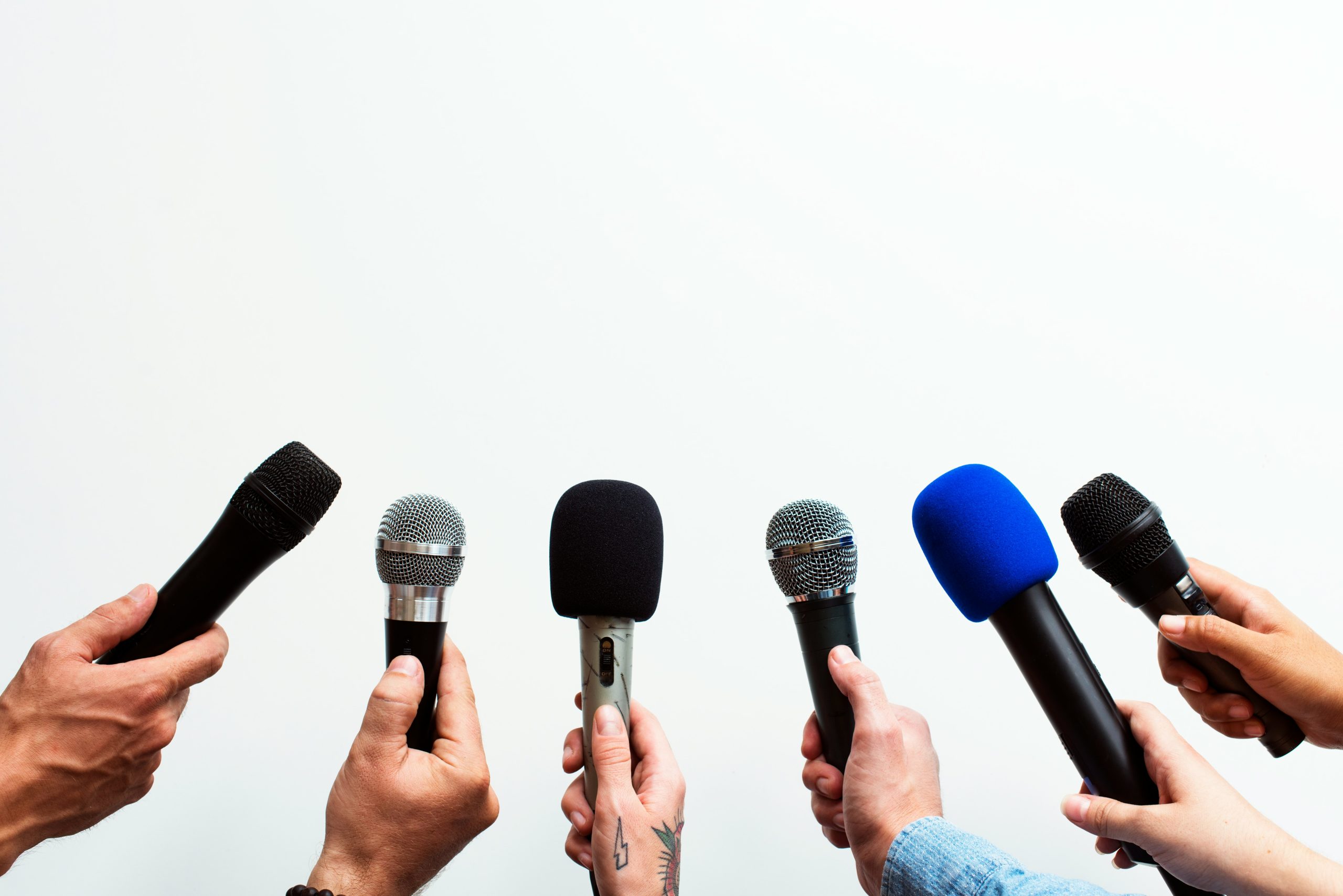
Interviews are an important tool in corporate communications and positioning. In conversations with journalists, experts can explain complex topics in an accessible way and comment on current developments. This strengthens the interviewee’s credibility and increases the visibility of the organization and the topics being discussed.
Successful interviews rarely happen by chance. Careful preparation and the targeted networking of the right experts with the appropriate editorial teams often form the foundation for a successful conversation. This also includes supporting journalists in advance with relevant information, background materials, visual content, or a press kit, as well as coordinating expectations and thematic priorities early on. In this way, both sides benefit from a well-prepared and content-focused exchange.
Especially in times of growing media skepticism, personal context based on authentic statements is becoming increasingly important: Over 70% of Austrians view the increasing use of AI in journalism critically. Good interviews therefore not only generate attention but rely on verifiable expertise rather than interchangeable, algorithmically sorted content.
In conversation with Bernhard Madlener, a communications professional with many years of experience in journalism—including at *Der Standard*—we discuss professional interviewing techniques, how to interact confidently with media representatives, and how companies can convey their messages credibly.
Why do you think interviews are a particularly valuable PR tool?
In an interview—ideally in person or via (video) call, less often in writing—experts from business, advocacy groups, or academia (etc.) come into contact with the “gatekeepers” of the media landscape. The former thus have the opportunity to convey their messages in their own words—and, at the latest during the approval process or upon the publication of the interview or their quotes—receive a “reality check” regarding actual public interest through editorial selection and weighting. Journalists, in turn, sometimes gain early (“exclusive”) access to information and findings from studies or regarding social and economic developments.
From a PR perspective, the role of an interview goes beyond a one-time “client placement”—rather, it serves to establish the client’s public relevance, acts as a multiplier, and serves as a springboard to the next level of media exposure: whether other media outlets of the same type pick up quotes (Newspaper article A is mentioned in newspapers B, C, D…), or that other “media categories” take notice of the expert and also request an interview.
How do you recognize a good interview?
Journalistically: Relevant information that conveys specific contexts is presented in a way that is understandable and interesting to audiences with varying levels of knowledge.
From a PR perspective: The interviewee has succeeded in conveying the desired messages, thereby not only serving their own (political, business) purposes but also offering the audience added value.
What role do interviews play in an era of AI-generated content and growing media skepticism?
Especially when supposedly all the world’s knowledge is available in databases, search engines, and LLM systems, there is a need for experts who can contextualize issues historically, sociologically, politically, and economically, engage in direct dialogue, and thus foster social discourse.
What should companies keep in mind when they want to showcase their expertise through interviews?
The messages conveyed must be factually verifiable—through science and research, through transparent revenue figures, etc. The people speaking on behalf of a company must be credible—which is why the numbers-driven CEO isn’t always the right person to interview when the topic is, say, quantum physics or palliative care. It makes more sense to limit yourself to two or three good, verifiable talking points that can be repeated across multiple media outlets than to try to “sell” too many topics.
What tips do you have for dealing with media representatives during an interview?
Be honest, come across as relaxed but confident, and admit to feeling nervous—during the preliminary discussion, but not necessarily on camera or during a live interview. Find out in advance about the interviewer or the media outlet and their areas of focus (or have the supporting PR agency provide this information). Take the reins from the start and create a positive atmosphere without “sucking up.” Journalists today often have little time to prepare thoroughly for an interview—which creates even more opportunity to answer questions beyond the exact wording. Nevertheless: Don’t make it too difficult for your colleagues, and still give them what they asked for.
What mistakes should be avoided at all costs?
Avoid coming across as know-it-all or disrespectful, as well as reacting in a brusque or annoyed manner to unexpected questions or any gaps in your knowledge. Especially in challenging interview situations, a calm, professional tone pays off. The goal should be to answer even critical or surprising questions confidently and constructively. Professional media training helps you maintain control of the conversation, even under pressure.
It can also be helpful to mention the available time frame right at the start of the interview. This provides clarity for both parties, helps keep the conversation structured, and ensures that the interview proceeds efficiently. At the same time, it allows for enough flexibility to extend the conversation in a comfortable atmosphere if necessary.
Running a recording device can provide additional reassurance, particularly for less experienced interviewees, and serve as helpful documentation in case of follow-up questions or ambiguities later on.

Especially in the age of AI and information overload, personal insight, expertise, and credible voices are becoming increasingly important.
Bernhard Madlener
Communications professional with many years of experience in journalism
Especially in the age of AI and information overload, personal insight, expertise, and credible voices are becoming increasingly important.
Bernhard Madlener
Communications professional with many years of experience in journalism
Contact
Legal Notice
Social Links

Contact
Legal Notice
Social Links
comm:unications has been providing high quality PR services since 1996. For our clients, we develop PR strategies and creative content. We create messages and stories and score with contacts, media relations, video PR and social media. We get things moving with marketing campaigns, PR events and awareness campaigns. Our specialities are systemic CEO consulting, litigation PR and crisis communications.


Sign up for our newsletter
oder press mailing list
Seit 1996 liefert comm:unications höchste Qualität in allen PR-Bereichen. Für unsere Kunden entwickeln wir PR-Strategien und Creative Content. Wir konzipieren Botschaften und Stories. Wir punkten mit Kontakten, reichweitenstarker Medienarbeit, Video-PR und Social Media. Wir bewegen mit Marketing-Aktionen, PR-Events und Awareness-Kampagnen. Spezialbereiche sind systemische CEO-Beratung, Litigation PR und Krisen-Kommunikation.
Melden sie sich für unseren Newsletter
oder Presseverteiler an.
